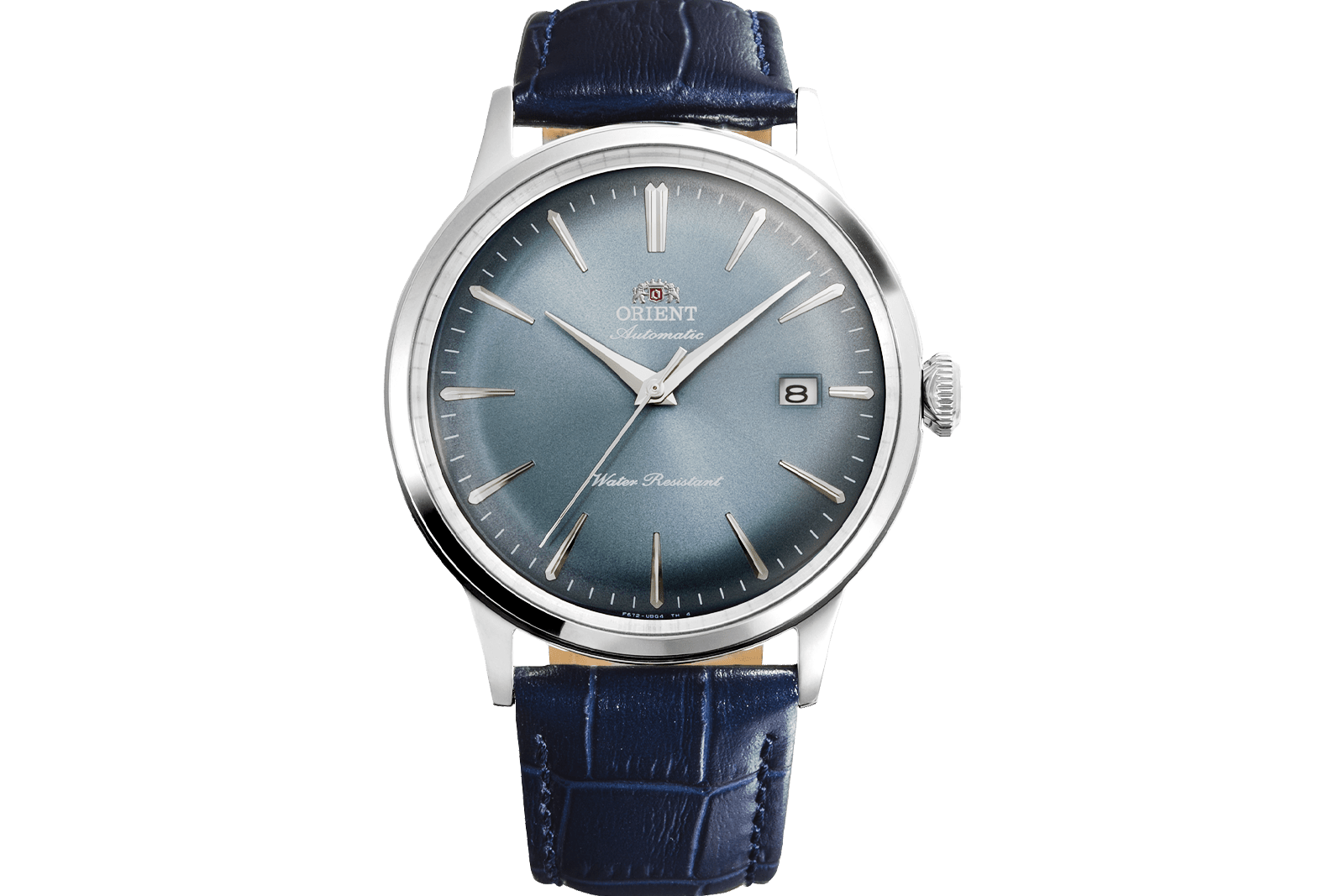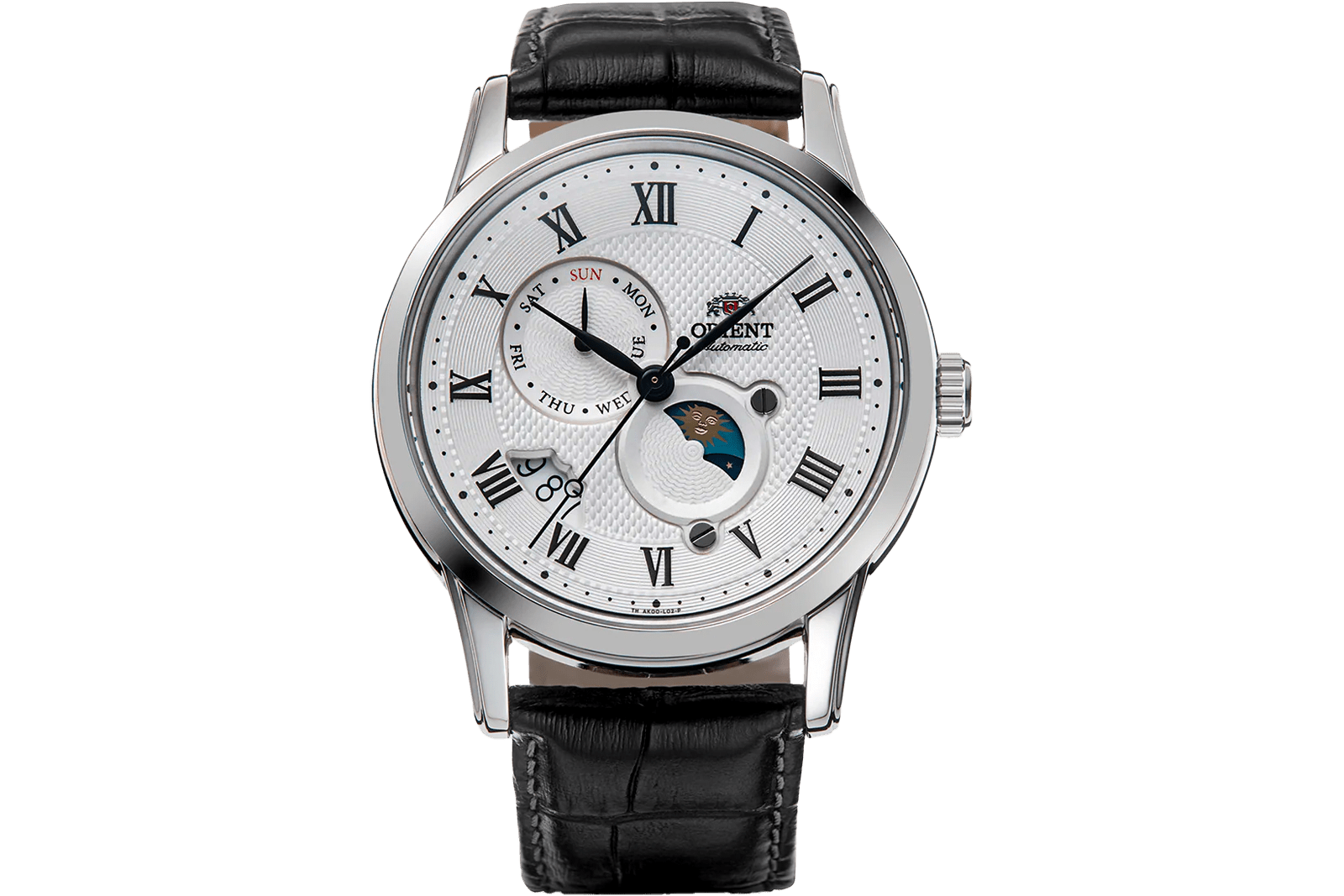
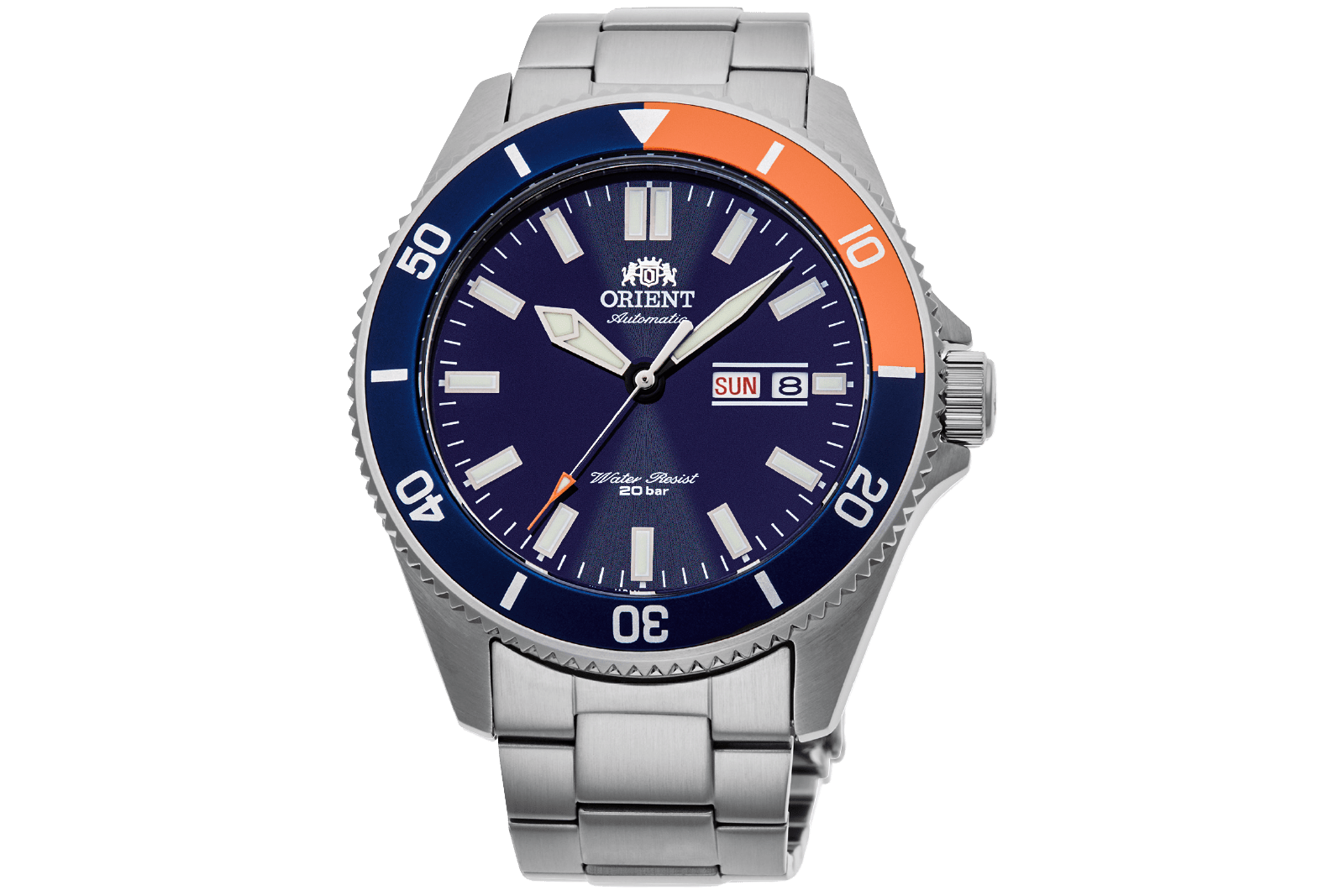
Don’t set the date on an Orient automatic between 8 p.m. and 4 a.m. That is the rule in Epson’s user guide for the F6922, the day-date caliber in the Kamasu and the Kanno, and in the guides for four other Orient movements. Seiko‘s window for the date-only 4R35 is shorter, 9 p.m. to 1 a.m. Citizen‘s for its 8200-series automatics is longer, 9 p.m. to 4:30 a.m.
The reason is the same in every manual. Around midnight the calendar wheel is already being pushed forward by the movement. Turn it by hand at the same time and, in Epson’s words, “the calendar may not switch the next day.” Seiko warns of “problems such as the date failing to change the next day,” and for its day-date 4R36 adds that it “may cause damage.” Citizen says that correcting the date in that period “may prevent the date from changing on the following day.”
The no-change windows in 12 manuals
We read the current English instructions for seven Orient calibers on Epson’s support site, three Seiko calibers on seikowatches.com and two Citizen manuals on citizenwatch-global.com, two of which give separate windows for date and day-date models. Each window below is copied from the manual. The hours are our count.
| Caliber | Found in (examples) | Do not set the date between | Hours |
|---|---|---|---|
| Orient F6922 (day-date) | Kamasu, Kanno, M-3 Diver | 8 p.m. and 4 a.m. | 8 |
| Orient F6722 | AC0Q Diver, Stretto Date | 8 p.m. and 4 a.m. | 8 |
| Orient F6B24 (day-and-night display) | AK00, Bambino Version 9 | 8 p.m. and 4 a.m. | 8 |
| Orient F6P22 (GMT) | Kamasu GMT | 8 p.m. and 4 a.m. | 8 |
| Orient Star F6N43 | Contemporary Date, Contemporary Index | 8 p.m. and 2 a.m. | 6 |
| Orient Star F8N64 | M34 F8 Date | 8 p.m. and 2 a.m. | 6 |
| Orient VS422 solar quartz | Solar Quartz Diver | 9 p.m. and 1 a.m. | 4 |
| Seiko 4R35 (date) | Presage | 9 p.m. and 1 a.m. | 4 |
| Seiko 4R36 (day-date) | Seiko 5 Sports | 9 p.m. and 4 a.m. | 7 |
| Seiko 6R35 | Prospex, Presage | 9 p.m. and 1 a.m. | 4 |
| Seiko 4R34 (GMT) | Seiko 5 Sports GMT | 9 p.m. and 3 a.m. | 6 |
| Citizen 82xx, 83xx and 41xx automatics | Citizen mechanical NK models | 9 p.m. and 4:30 a.m. | 7.5 |
| Citizen Eco-Drive E168, date models | Eco-Drive | 9 p.m. and 1 a.m. | 4 |
| Citizen Eco-Drive E168, day-date models | Eco-Drive | 9 p.m. and 4 a.m. | 7 |
Three things stand out. Orient’s mechanical calibers have the longest windows of the group, eight hours on every F6 movement we checked, against seven on Seiko’s day-date 4R36 and 7.5 on Citizen’s automatics, with the Orient Star F6N43 and the newer F8N64 at six. The windows all open between 8 p.m. and 9 p.m., so the start barely varies. The end varies a lot, from 1 a.m. to 4:30 a.m., and the later ends belong to watches that also change a day of the week. Seiko notes that on the 4R36 “the date changes around midnight, and the day of the week changes at around 4:00 a.m.”
Which positions on the dial are safe for every watch?
Anywhere from 4:30 to 8 on the dial. Put all 14 windows together and the earliest start is 8 p.m. and the latest end is 4:30 a.m. That combined window is 8.5 hours long. Outside it, from 4:30 a.m. to 8 p.m., none of the manuals objects.
There is a practical shortcut in that. You often do not know whether a stopped watch thinks it is morning or evening. But a time between 4:30 and 8 is safe in both halves of the day for every caliber in our table, because 4:30 to 8 a.m. is after every window ends and 4:30 to 8 p.m. is before any window starts. So the simplest routine for a watch that has run down is to set the hands to about 6:30, set the date, then set the time.
Park the hands between 4:30 and 8 on the dial before you touch the date, and none of these 12 manuals has a complaint.
How do you set the date and time in the right order?
The manuals agree on the order, with small differences in which crown position does what.
- Wind the watch first if it has stopped. Seiko’s 4R36 manual tells owners to “make sure that the watch is working” before setting the date. Most Orient and Seiko automatics in the table can be hand-wound at the crown’s normal position.
- Pull the crown to the time-setting position and move the hands to about 6:30.
- Push the crown to the first click, the date-setting position, and turn it to set the date. On the F6922 and the Seiko 4R36 the day of the week is set at the same click by turning the crown the other way. Citizen’s mechanical manual says the date moves with the crown turned left and the day with it turned right.
- Pull the crown back out and advance the hands until the date changes. Epson’s guides say the time “becomes ‘a.m.’ when the date changes,” and Seiko’s say the same, so this is how you find which half of the day you are in.
- Advance to the correct time, then push the crown home. If the crown screws down, screw it back in.
If the date is one day ahead after step 4, the watch was on the p.m. side. Advance the hands another 12 hours rather than setting the date back. Our guide to Orient’s day-and-night and 24-hour displays covers the watches where a sun-and-moon disc tells you the half of the day at a glance.
What about the end of the month?
The Seiko and Citizen manuals both say the date has to be corrected after a month with fewer than 31 days. Seiko lists them as “February, April, June, September and November.” Citizen’s mechanical manual says to reset the date at the start of March, May, July, October and December. Orient’s Multi-Year Calendar, the one watch in the catalog named for its calendar, is sold out at Orient Watch USA, as our count of the calibers Orient Watch USA sells shows.
Does setting the date in the window break the watch?
Most of the manuals stop short of saying so. Epson and Citizen say only that the date may not change the next day. Seiko goes further for the 4R36, warning that setting the date or day in its window “may cause damage.” The safe hours are wide enough that the risk is easy to avoid.
The short version for each brand
- Orient (Epson guides). Avoid 8 p.m. to 4 a.m. on the F6 mechanical calibers, 8 p.m. to 2 a.m. on the Orient Star F6N43 and F8N64, 9 p.m. to 1 a.m. on the VS422 solar quartz.
- Seiko. 9 p.m. to 1 a.m. on the 4R35 and 6R35, 9 p.m. to 3 a.m. on the 4R34 GMT and 9 p.m. to 4 a.m. on the day-date 4R36.
- Citizen. 9 p.m. to 4:30 a.m. on the mechanical 82xx, 83xx and 41xx, 9 p.m. to 1 a.m. or 4 a.m. on the E168 Eco-Drive depending on whether it shows the day.
When you read a spec sheet, the caliber number is the key to finding the right manual. Our guide to reading a watch spec sheet explains where to find it.