By the makers’ own charts, a 30m watch is for rain and hand washing, 50m is for swimming, 100m and 200m add snorkeling and skin diving, and only a watch marked as a diver’s watch is cleared for scuba. That is the short version. The longer version is that the three big Japanese makers, Seiko, Citizen and Orient, each publish a table of what their ratings permit, and the tables differ in ways that matter.
We read all three, put them side by side, and then applied each maker’s chart to 13 current watches, so you can see what a given rating means for a watch you might actually buy.
What does a water resistance rating measure?
It measures pressure, not depth. Citizen’s support page states the conversion plainly, “1 bar” is equivalent to a pressure of 1 atmosphere and a water depth of 10m. So 5 bar, 50m and WR 50 are three ways of writing the same rating, and 10 bar is 100m.
The pressure is what the case was built to withstand when new and still. A swimmer’s arm stroke, a dive into a pool and a wave all add moving pressure that the number does not describe, which is why every maker publishes a usage chart instead of letting the number speak for itself.
Two international standards sit behind the markings. ISO 22810:2010 covers ordinary water-resistant watches. It replaced ISO 2281:1990, and, according to the summary published by the French standards body AFNOR, it sets the requirements and test methods for water resistance and the markings a maker may apply. ISO 6425:2018 is the separate standard for divers’ watches. The Standards Council of Canada’s summary says it applies to watches built to withstand diving to at least 100m, with a secured way of measuring dive time that is visible in the dark. A 200m rating alone does not make a watch an ISO 6425 diver.
The three charts, side by side
The table below is our compilation of the usage charts on Seiko’s US customer service pages, Citizen’s global support pages and Orient’s watch care guide (published on an Epson site, since Orient is part of Seiko Epson). “Yes” means the maker lists the activity as acceptable for that rating.
| Rating | Seiko says | Citizen says | Orient says |
|---|---|---|---|
| 3 bar (30m) | Accidental splashes and rain only | Rain and face washing only | Face washing and rain only |
| 5 bar (50m) | Adds swimming, yachting and showering | Adds swimming, not free diving | Adds swimming, no diving of any kind |
| 10 bar (100m) | Adds bathing and shallow diving, not scuba | Adds skin diving, not scuba | Adds skin diving, not scuba |
| 20 bar (200m) | Same as 10 bar | Same as 10 bar | Same as 10 bar |
| Diver’s 200m | Adds scuba diving | Adds scuba diving | Adds scuba diving |
| Saturation diving | Only the Professional Diver’s 1,000m class | Only watches marked for saturation or helium diving | Not covered by the general chart |
Read down the columns and the agreement is broad. Read across the rows and three differences stand out.
Showers are the real disagreement
Seiko’s chart puts showering in the same column as swimming, so by Seiko’s reading a 5 bar watch can go in the shower. Orient’s care guide goes the other way and tells owners to take the watch off before showering or bathing, because soap and shampoo “will accelerate deterioration of gaskets”. Citizen’s chart does not list showers either way, but it rules out holding a watch under a running faucet regardless of rating.
Timex, outside our three charts, sides with Seiko in its product copy. Its page for the 50m Marlin Automatic calls it suitable for light swimming or showering, and not for snorkeling.
The gap is not about pressure. A shower is far less than 5 bar. It is about gaskets, the rubber seals that keep water out, and how fast soap and hot water wear them down. That is a maintenance judgment, and Orient makes it more cautiously than Seiko does.
Hot water is ruled out by two of the three
Citizen lists immersion in hot water, a hot spring or a sauna among the things no Citizen watch should face, whatever its rating. Orient says the same about hot springs and saunas. Seiko’s water resistance page does not address heat at all. If you want one rule that satisfies all three, keep any watch out of the hot tub.
Nobody lets you use the crown wet
All three makers agree on this. Citizen and Orient forbid using the crown or buttons underwater or while the watch is wet, at every rating. Seiko warns against washing a watch with the crown pulled out. On a watch with a screw-down crown, the protection only works when the crown is screwed fully home, a point Orient’s guide makes directly.
What does 200m without a diver’s marking allow?
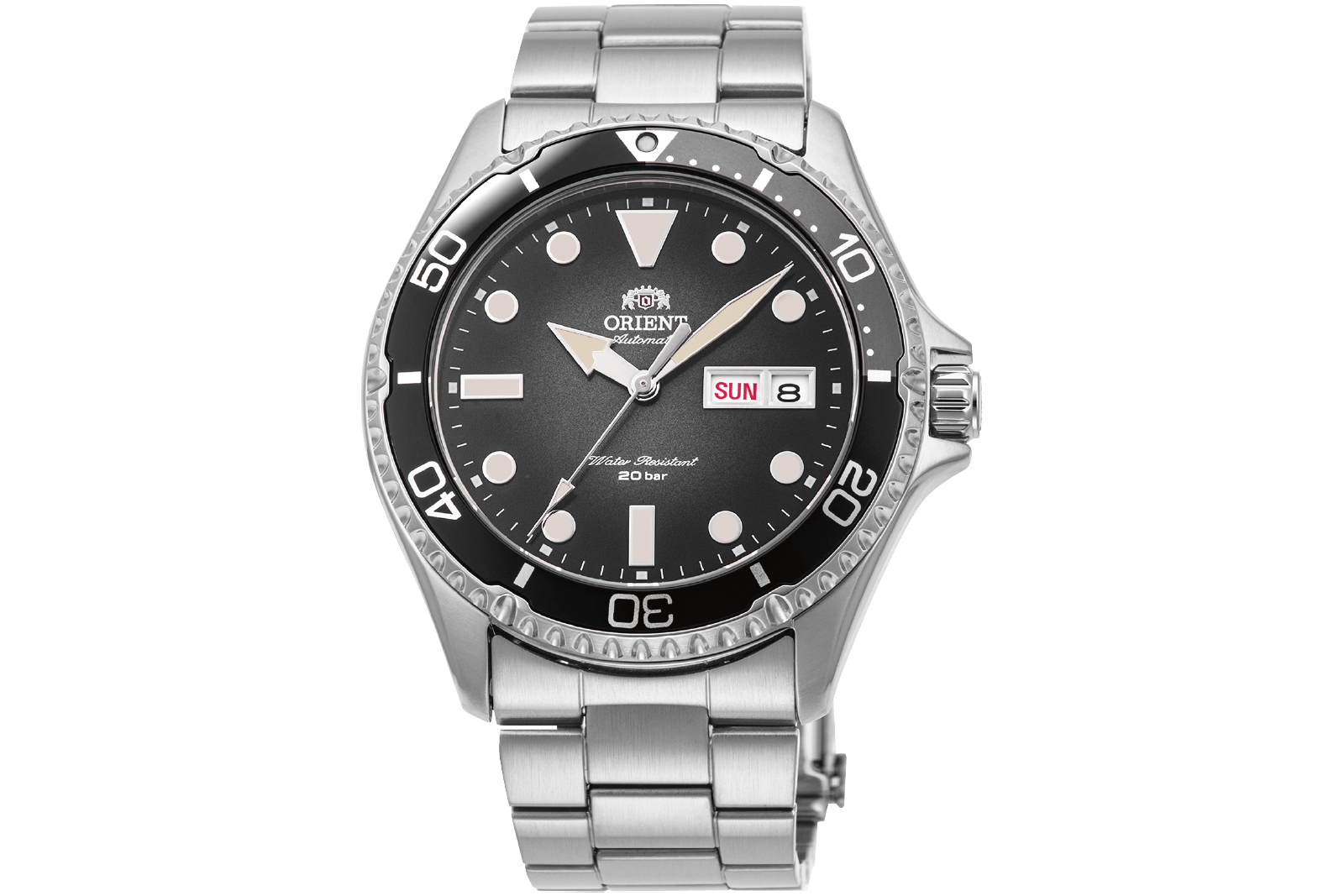
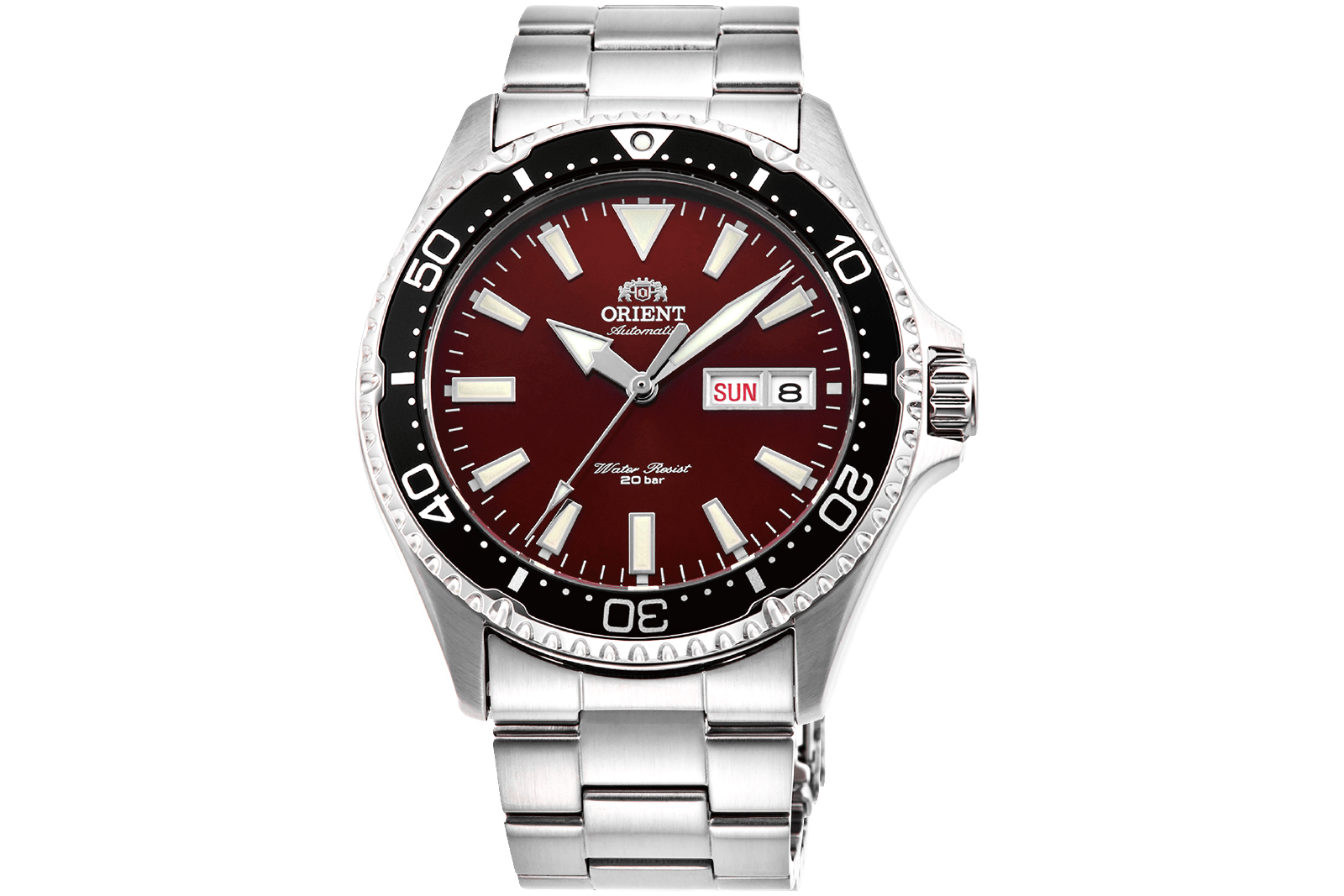
By the makers’ own charts, it allows skin diving, which means diving on a held breath, but not scuba diving with air tanks. This is the row most buyers misread, because a 200m watch with a rotating bezel looks like a dive watch.
Orient’s guide is explicit. Watches marked 10 bar or 20 bar are “extra water resistance for everyday life”, and the chart stops them short of scuba. Only the row marked DIVER’S WATCH 200m reaches it. Seiko’s chart likewise marks 10, 15 and 20 BAR as acceptable for bathing and shallow diving, and saves scuba for watches marked as divers’ watches.
A rotating bezel tells you how a watch was styled. The word DIVER’S on the dial tells you what the maker will stand behind.
Our table: 13 current watches, read against their maker’s chart
Here we took current watches and asked what each maker’s own chart, or product page, allows for that rating and marking. Ratings and prices come from each maker’s US product page, checked on November 9, 2026. Where the maker does not publish a usage chart we could find, we say so rather than borrow another brand’s.
| Watch | Price | Rating | Diver’s marking | What the maker’s own guidance allows |
|---|---|---|---|---|
| Orient Bambino 38 | $295 | 3 bar (30m) | No | Rain and hand washing (Orient chart) |
| Timex Marlin Automatic | $299 | 50m | No | Light swimming or showering, not snorkeling (Timex page) |
| Orient Stretto Date | $315 | 5 bar (50m) | No | Swimming, no showers per Orient’s care guide |
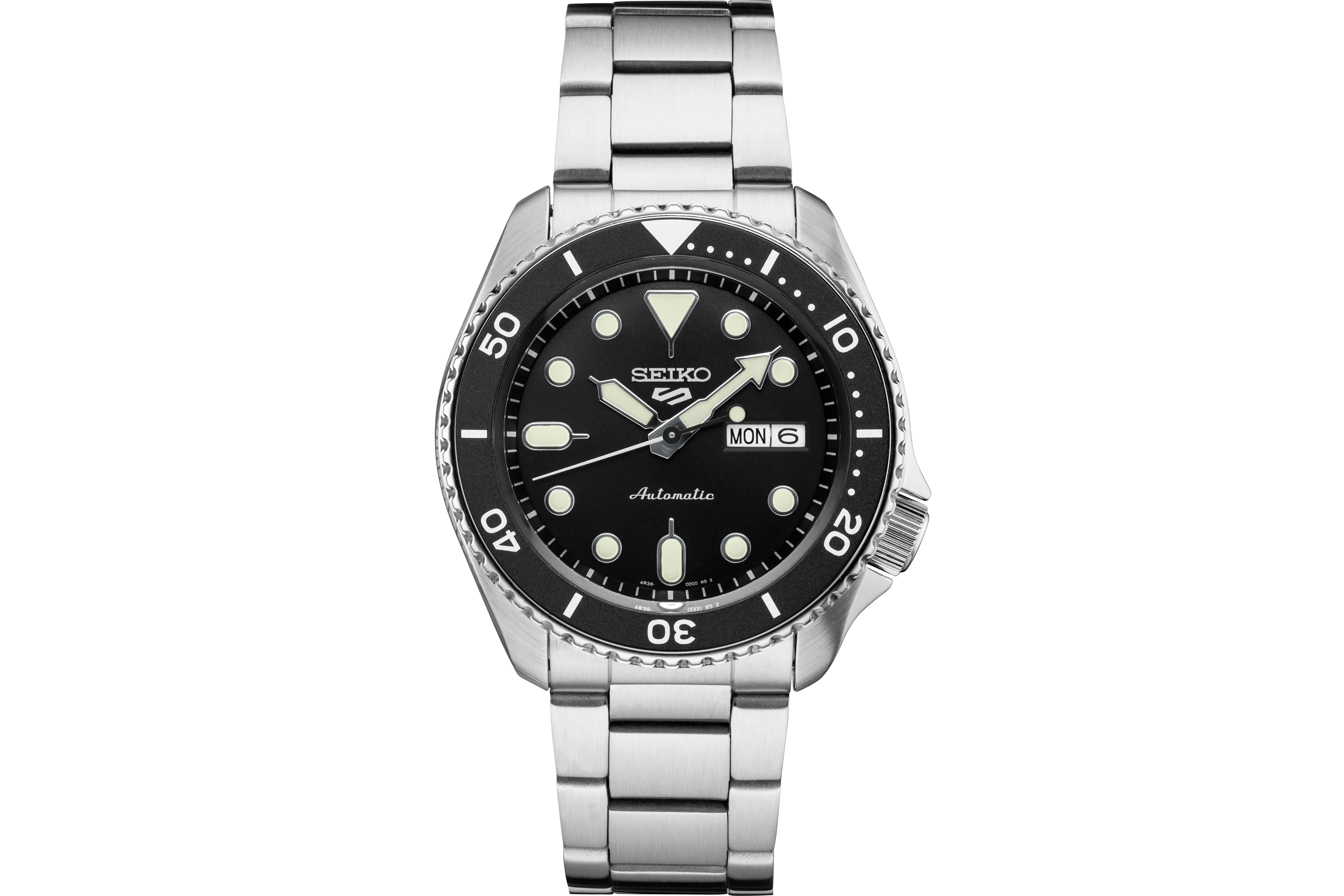
| Seiko 5 Sports SRPD55 | $350 | 100m | No | Swimming, showering, shallow diving, not scuba (Seiko chart) |
| Orient Kamasu | $375 | 20 bar (200m) | No | Skin diving, not scuba (Orient chart) |
| Seiko Presage Cocktail Time HCB002 | $475 | 5 bar (50m) | No | Swimming and showering (Seiko chart) |
| Citizen Tsuyosa NJ0150-56E | $495 | 5 bar (50m) | No | Swimming (Citizen chart), “still-water swimming” per the product page |
| Citizen Tsuyosa Shore NJ0230-59L | $525 | 10 bar (100m) | No | Skin diving, not scuba (Citizen chart) |
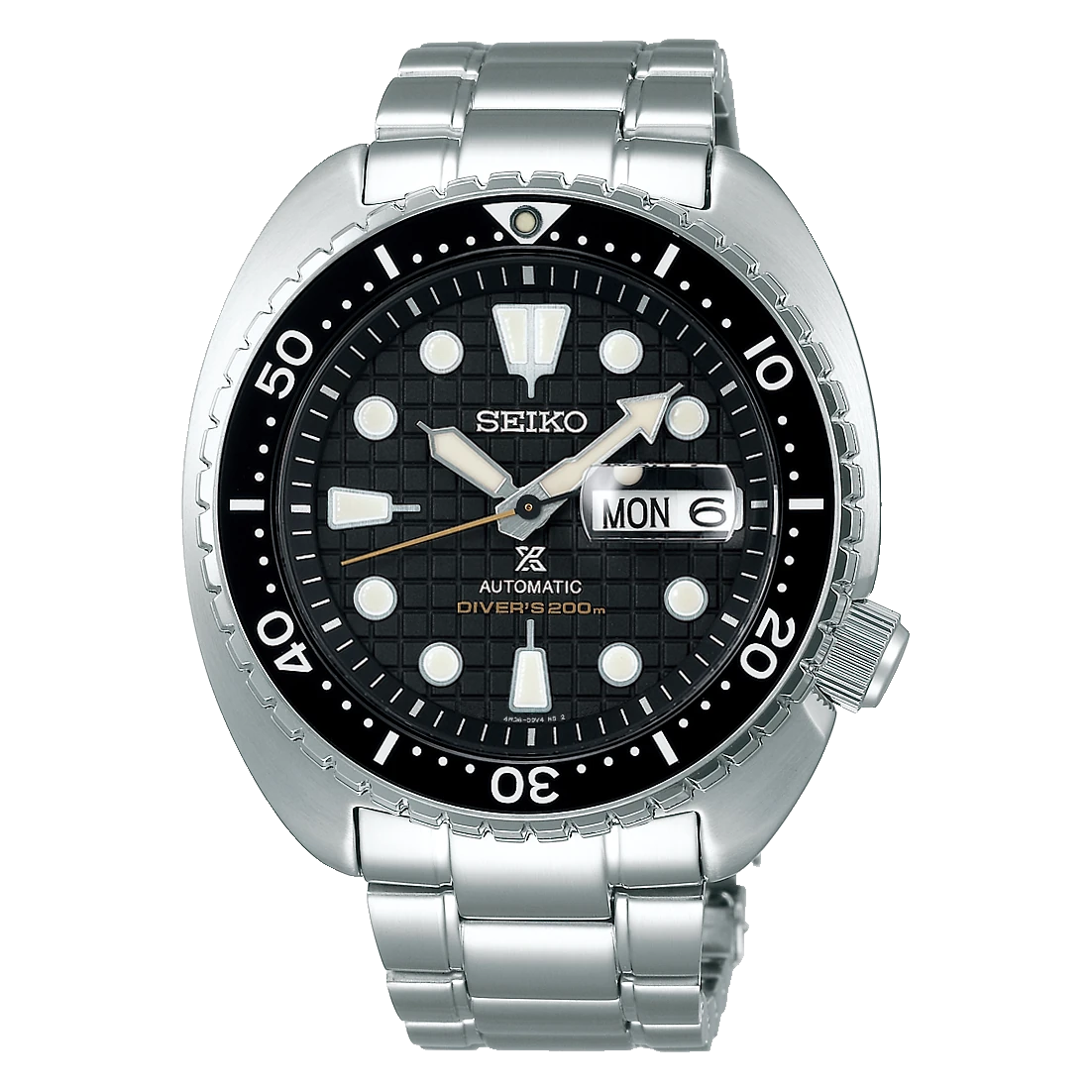
| Seiko Prospex SRPF03 | $550 | 200m | Yes, diver’s | Scuba diving (Seiko chart) |
| Citizen Promaster Dive Automatic NY0136-52L | $625 | 200m | Yes, described as ISO compliant | Scuba diving (Citizen chart) |
| Hamilton Khaki Field Mechanical 38 | $675 | 5 bar (50m) | No | Rating only, no usage chart found |
| Tissot PRX Powermatic 80 | $850 | 10 bar (100m) | No | Rating only, no usage chart found |
| Christopher Ward C60 Trident Pro 300 | $878 | 30 ATM (300m) | No ISO claim on the product page | Rating only, no usage chart found |
Three things come out of the table.
First, price and permission do not line up. The $350 Seiko 5 Sports is cleared for more by its maker’s chart than the $675 Hamilton, for which Hamilton’s product page gives the rating and nothing more.
Second, the cheapest watch on the list that its maker clears for scuba is the $550 Seiko Prospex SRPF03, because it carries the diver’s marking. The Orient Kamasu, $375 at Orient Watch USA, has the same 200m figure and a dive bezel, and Orient’s own chart still stops it at skin diving. Our Kamasu review treats it as a strong everyday sports watch, and nothing here changes that, but it is not sold as a scuba instrument.
Third, a bigger number does not always buy a broader permission. The Christopher Ward is rated to 300m, more than any watch above it, but its product page makes no ISO 6425 claim, so on paper the strongest documented permission for scuba in this list belongs to two 200m watches.
How to read your own watch
Start with the dial and caseback, not the box. Citizen’s page tells owners to look for the rating on the dial or caseback, and Seiko’s does the same. Then check three things.
- The number and the unit. 5 bar, 50m and WR 50 are the same rating.
- The word DIVER’S. Without it, the makers’ charts stop short of scuba, even at 200m.
- The crown. If it screws down, it is only sealed when it is screwed in.
Then remember what the charts say about age. Seiko notes that water resistance is affected by the ageing of gaskets and by deformation from accidental shocks. A watch that passed its rating when new is not guaranteed to pass it years later, which is why the makers recommend periodic servicing. Seiko’s instructions for its 4R caliber divers suggest an overhaul every two or three years.
If you want the case for choosing between a water-resistant sports watch and a rated diver, our comparison of the Orient Mako and Seiko King Turtle works through exactly that choice, and our guide to reading a watch spec sheet covers where the rating sits among the other numbers.