The government’s price index for watches sold in the United States reached 239.040 in September 2026, its highest reading since the Bureau of Labor Statistics started publishing it in January 1997. In October it eased to 233.714, and that was still higher than any month before February 2026.
Put plainly, US watch prices rose about 9.3% between September 2025 and October 2026, by our calculation from the Bureau of Labor Statistics consumer price index for watches. Overall consumer prices rose 3.9% over the same 13 months. In May 2026 the watch index was 21.4% above May 2025, the steepest 12-month rise in the series.
We pulled the full series from the BLS data service on November 17, 2026, along with the indexes for jewelry and for all items, and set them against the dates the tariff rate on imported watches changed. The October figures are the newest the government has, released on November 10.
Why is there no 12-month change for October?
Because October 2025 is missing. The BLS release for October 2026 says it “did not collect survey data for October 2025 because of a lapse in appropriations,” and so it does not publish 12-month changes that would need that month. The watch series has a gap there too. The nearest clean comparison is September 2025, which is why our headline figure runs over 13 months rather than 12.
The watch index, month by month
| Month | Watches index | Change from a year earlier | Jewelry, change from a year earlier | All items, change from a year earlier |
|---|---|---|---|---|
| Jan 2026 | 210.933 | +7.1% | +7.2% | +2.4% |
| Feb 2026 | 217.456 | +11.2% | +6.4% | +2.4% |
| Mar 2026 | 225.017 | +9.9% | +7.0% | +3.3% |
| Apr 2026 | 229.406 | +16.1% | +8.8% | +3.8% |
| May 2026 | 236.345 | +21.4% | +8.9% | +4.2% |
| Jun 2026 | 225.950 | +14.1% | +5.9% | +3.5% |
| Jul 2026 | 234.226 | +15.2% | +10.6% | +3.4% |
| Aug 2026 | 230.226 | +7.8% | +9.2% | +3.4% |
| Sep 2026 | 239.040 | +11.8% | +6.3% | +3.7% |
| Oct 2026 | 233.714 | not available | not available | not available |
Two things stand out. Every month of 2026 rose faster than overall inflation, by between 4.4 and 17.2 percentage points. And from February on, every reading set a level the series had never reached before. The previous high was 213.734, in September 2025. Nine straight months have topped it.
How unusual is a 21% rise?
Very. Before 2026 the largest 12-month increase in the watch index was 14.7%, in May 2021, and only a handful of months in nearly three decades of data passed 12%. For most of the past decade the index barely moved. Its annual average was 165.5 in 2015 and 197.5 in 2024, a rise of about 19% over nine years. The average for the first ten months of 2026 is 228.2, which is 12.9% above the 2025 average by our arithmetic. One year did more than the previous nine combined.
The watch index is also volatile from month to month. It fell 4.4% between May and June 2026 and 2.2% between September and October. The BLS prices a sample of specific watches in specific stores, and a series built on a narrow category moves more than the headline index does. That is a reason to read the trend over several months, not a single reading.
The watch index rose more in the first ten months of 2026 than in the nine years before it.
Did the tariffs cause it?
The timing fits partly, and the companies that sell watches in the US have said tariffs played a role. The index was at 204.840 in March 2025, the last month before a 10% duty on almost all imports took effect on April 5, 2025. By October 2026 it was 14.1% higher. Jewelry rose 9.1% and all items 5.5% over the same span.
The order of events is less tidy than that. As our timeline of US watch tariffs sets out, the heaviest rate on Swiss watches, 39%, ran from August 7 to November 13, 2025, under Executive Order 14326. Yet the watch index barely moved in that stretch, ending 2025 at 200.065. The big increases came in the spring of 2026, after the Supreme Court had struck down those duties and a 10% surcharge under Proclamation 11012 had replaced them from February 24. Since July 24, 2026, Swiss and Japanese watches have paid 12.5% in total under a Section 301 notice published by the Trade Representative.
One explanation that fits the data is a lag between the border and the shop. A watch already in a retailer’s stock was imported at the old rate, so new price lists take time to show up in what customers pay. The index alone cannot prove that, but it is consistent with what the retailers themselves have said, and it would explain why prices have not fallen back now that the rate is lower.
Watches of Switzerland Group, which sells Rolex, Omega and other brands in the US, said as much in its results statement of July 14, 2026. “In the US, the introduction of tariffs on Swiss watch imports led to price increases and changes to retailer margin structures,” it said. “While tariff levels subsequently moderated, some of these changes have remained.” Its US revenue has since grown faster than its UK business, as we reported in our story on its first half.
What the Japanese makers report
Citizen Watch Co., which owns Bulova, publishes a chart of its average selling price. In its first-half presentation of November 12, 2026, the unit sales price of Citizen and Bulova watches in North America, in local currency, was up 42% from its fiscal year 2021. The chart shows most of that rise after fiscal 2024, from roughly 120% of the 2021 level to roughly 142% in the first half of fiscal 2026. That is a measure of mix as well as price, since it rises when customers buy more expensive models, but it points the same way as the government index.
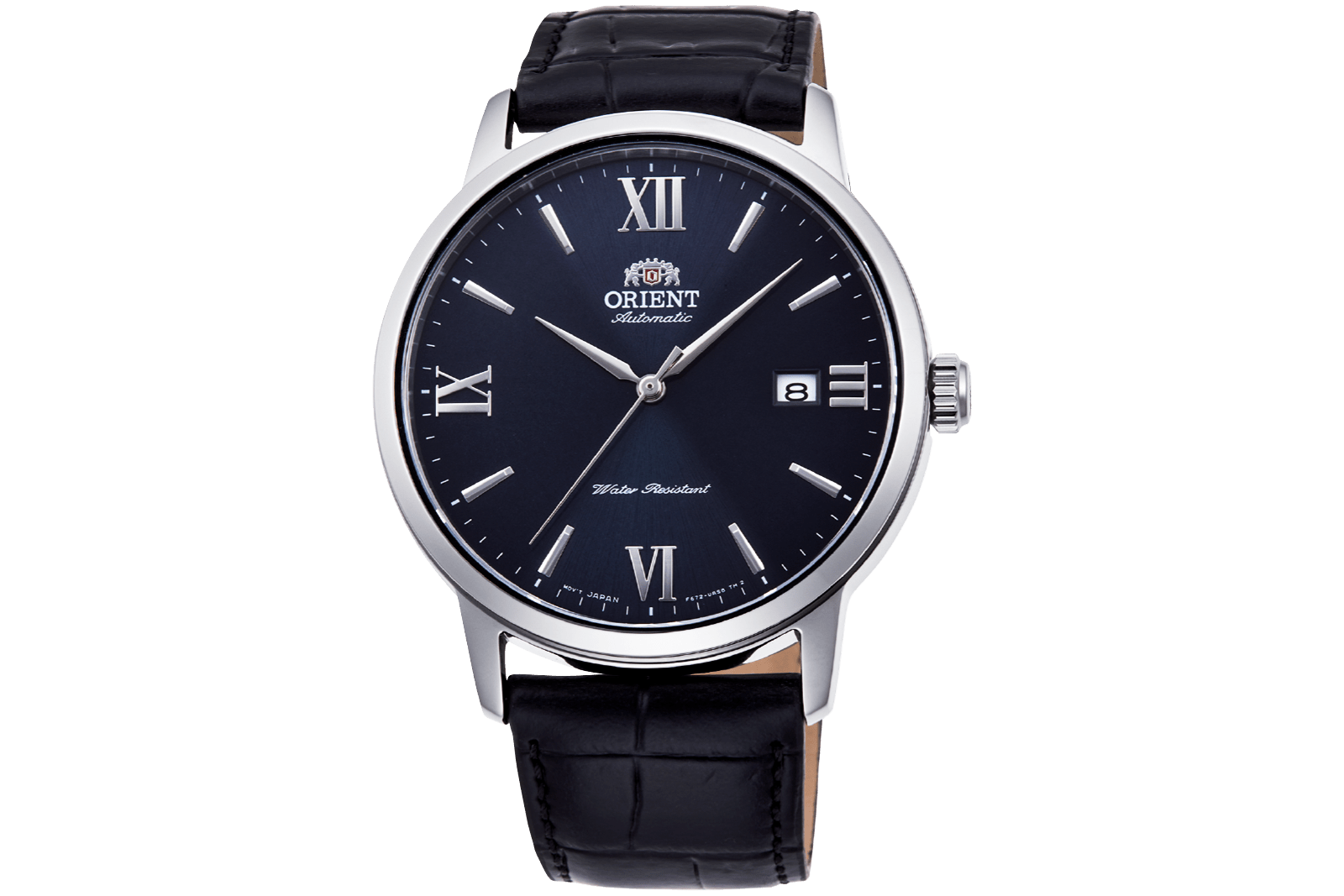
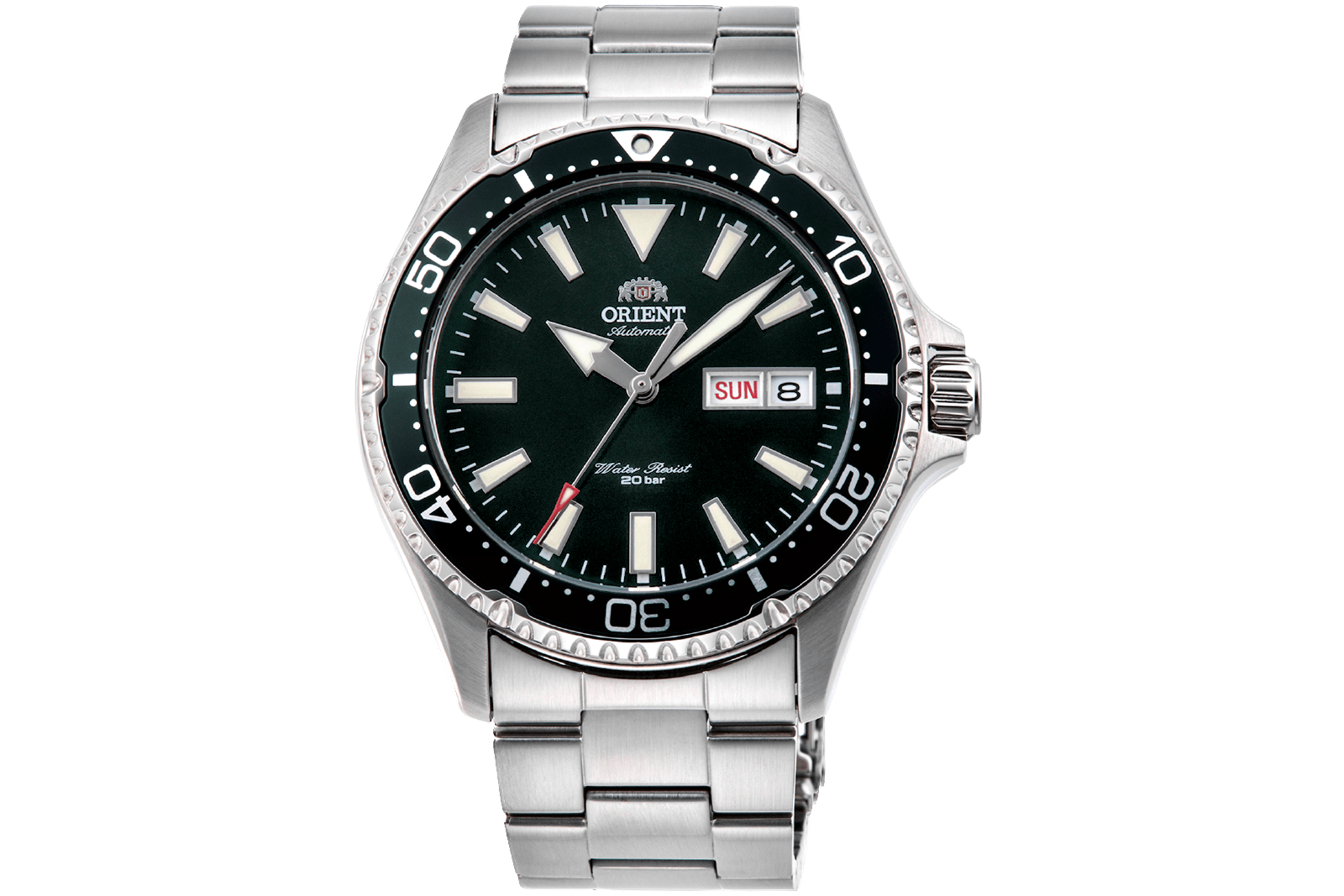
Orient‘s own US prices have held still in the weeks we have tracked them. Six watches whose prices we recorded on October 5, 2026 were at the same price on November 17. The Bambino Version 7 in 38.4mm and the 40.5mm Bambino Version 7 are each $295 at Orient Watch USA, the two Bambino Version 2 references are $255 and $275, and the Kamasu RA-AA0003R39B and M-3 Diver RA-AA0820R39B are $375. Six weeks is a short record, and it says nothing about earlier changes. The whole store has a median price of $330 across 243 watch listings today, against $325 in our price ladder of November 11.
What the index does not tell you
It does not say which watches rose. The BLS publishes no breakdown by brand, price band or country of origin, so the index cannot separate a $40,000 Swiss watch from a $40 fashion watch. It covers what urban consumers actually pay at the register, including sales tax.
It also cannot show the October picture against a year earlier, which is the comparison most people want this month. That gap will close with the November figures, because November 2025 was collected.
What to watch next
The BLS publishes the November 2026 index on December 10, 2026, and it will carry the first clean 12-month comparison since September. Any reading above 204.565, the November 2025 level, would mean prices are still higher than a year earlier, and a reading above 213.734 would make it ten months in a row above every pre-2026 high. Watches of Switzerland reports its full first-half results the same day, December 10, with its US margins. The Federation of the Swiss Watch Industry’s October export figures, expected later in November, will show whether shipments to the US are still climbing at the 12.5% rate.