In the overview of Citizen Watch Co.’s first-half results statement, released in Tokyo on November 12, 2026, is a sentence about American customs. Of the ¥3.9 billion Citizen received “as refunds of tariffs paid pursuant to the U.S. International Emergency Economic Powers Act,” ¥3.6 billion was booked as a reduction in the cost of sales for April to September.
That refund helps explain the headline number. Citizen’s watch business, which includes the Citizen and Bulova brands and the movements it sells to other watchmakers, sold ¥117.0 billion in the six months to September 30, 2026, up 31.0%, and made ¥22.4 billion in operating profit, up 91.1%. Citizen says its watch margin would have been 16.2% without the refunds, against the 19.2% it reported. By our arithmetic, that puts about ¥3.4 billion of the ¥10.7 billion profit increase, or about a third, down to the refund.
The rest is real growth. Citizen describes demand as strong in Japan, North America, Europe and Asia, and it raised its full-year forecast for the watch business on the same day.
The refund, taken out
Citizen gives the margin with and without the tariff refunds for the half and for the July to September quarter. We used those two margins to back out a refund-free profit figure. Citizen does not publish that figure itself, and because its margins are rounded to one decimal place our results can be off by about ¥0.1 billion.
| Citizen watch business | Apr to Sep 2025 | Apr to Sep 2026, as reported | Apr to Sep 2026, without refund (our estimate) |
|---|---|---|---|
| Net sales (¥ billion) | 89.3 | 117.0 | 117.0 |
| Operating profit (¥ billion) | 11.7 | 22.4 | about 19.0 |
| Operating margin | 13.2% | 19.2% | 16.2% (Citizen’s figure) |
| Profit growth on a year earlier | +91.1% | about +62% | |
| Jul to Sep quarter operating profit (¥ billion) | 7.3 | 15.3 | about 11.8 |
| Jul to Sep quarter margin | 15.4% | 24.7% | 19.0% (Citizen’s figure) |
From Citizen Watch’s FY2026 second-quarter presentation and reference data, November 12, 2026. Estimates without the refund are our arithmetic from the margins Citizen states (sales multiplied by the ex-refund margin). Our compilation.
Two things follow from the table. The whole refund landed in the second quarter, since the quarterly and half-year arithmetic give the same amount, about ¥3.4 to ¥3.5 billion. And even without it, the watch business grew its profit by about three-fifths on sales up by under a third. The slide deck also shows a small refund effect in Citizen’s devices and components business, whose margin is 8.9% with the refunds and 8.6% without.
At the half’s average rate of ¥160 to the dollar, the ¥3.9 billion refund is worth roughly $24 million. That is our conversion.
A second customs file that is still open
The same statement carries a separate note about US Customs and Border Protection, and it runs the other way. It concerns how Citizen Watch Company of America calculated the duty it owed on watches it imported years ago. We read the notes for both half-years and put the dates in order.
| Date | What Citizen’s filings say happened | Amount booked |
|---|---|---|
| August 2021 | CBP tells Citizen Watch Company of America that duties paid for 2015 to 2018 were insufficient, “due to differences in the method of calculating the amount payable.” The company disputes it. | |
| September 2025 | CBP charges duties on Citizen-brand watches for 2018 to 2021 after rejecting the company’s argument. | ¥2,678 million for 2018 to 2021, as an extraordinary loss in Apr to Sep 2025 |
| October 2025 | Charges follow on the company’s other brands for the same period. | (included above) |
| Apr to Sep 2025 | Citizen sets aside a provision for the 2015 to 2018 notice. | ¥3,532 million provision |
| Apr to Sep 2026 | CBP charges additional duties for “the remaining period of 2021.” Citizen says it has paid the full amount for 2018 to 2021 and is considering a lawsuit. | ¥360 million |
From the notes to Citizen Watch’s semi-annual consolidated statements of income, six months ended September 30, 2025 and 2026, as reproduced in the November 12, 2026 results statement. Our compilation.
Add those up and Citizen has booked ¥6,570 million of losses and provisions over the duty dispute, against the ¥3.9 billion it has just been refunded under a different law. On our arithmetic the refund covers about 59% of the older bill. The two do not offset in the accounts. The refund went into operating profit, and the dispute went below it as an extraordinary item.
Citizen says CBP has not told it that duties on watches imported in 2022 or later were insufficient. It also says that “depending on future determinations or claims by the U.S. authorities, additional customs duties may arise.” Neither note says what the calculation dispute is about in any more detail.
Where the sales growth came from
Citizen’s account of the half is broad. In Japan it credits Attesa and the Promaster sub-brand. In North America, it says Citizen and Bulova both grew through department stores, travel retail and its own e-commerce sites, with online sales up “sharply.” Europe grew on mechanical watches and Promaster, and in Asia it names Thailand and India.
The unit-price slide is the one buyers may notice. Citizen says the average unit sales price of Citizen and Bulova watches in North America is up 42% from its fiscal 2021, in local currency, and of Citizen-brand watches in Japan up 35%. The slide does not give the dollar figures behind those percentages.
The weak yen helps too. The dollar averaged ¥160 in the half, against ¥146 a year earlier. Converted at those average rates, the watch business’s sales rise from about $612 million to about $731 million. That is still a gain of about 20%, but well short of the 31% the yen figures show. Citizen does not break out the currency effect for watches.
Movements, the part of the business most watch buyers never see, grew as well. Citizen says sales of both analog quartz and mechanical movements were strong. Its Miyota mechanical calibers turn up in many watches from other brands, including the Timex we used in our accuracy ratings explainer.
How Citizen’s half compares with Seiko’s
Seiko Group published its first-half figures two days earlier, and we covered them in our November 11 piece on Seiko’s watch sales. The two companies define their watch businesses a little differently, but both include finished watches and movements, so the totals can be set side by side.
| Watch business, Apr to Sep 2026 | Citizen | Seiko Group |
|---|---|---|
| Net sales (¥ billion) | 117.0 | 122.4 |
| Growth on a year earlier | +31.0% | +24.6% |
| Operating profit (¥ billion) | 22.4 | 26.4 |
| Operating margin | 19.2% (16.2% without tariff refunds) | 21.6% |
| Full-year sales forecast, FY ending March 2027 (¥ billion) | 242.0 | 236.0 |
| Full-year operating profit forecast (¥ billion) | 40.0 | 39.0 |
| Last full year’s sales, FY ended March 2026 (¥ billion) | 197.0 | 203.1 |
From Citizen Watch’s FY2026 second-quarter reference data (November 12, 2026) and Seiko Group’s FY2026 first-half presentation (November 11, 2026). Seiko margin is our division of its figures. Our compilation.
Seiko’s watch business is still the larger of the two over the first half, by ¥5.4 billion. But Citizen’s new forecast has its watch sales for the full year at ¥242.0 billion, ¥6.0 billion above Seiko’s own forecast for its watch business. Last year the order was the other way round, with Seiko ahead by ¥6.1 billion. If both companies hit their numbers, Citizen’s watch business will be the bigger of the two by sales for the year to March 2027.
The forecasts also differ in shape. Seiko’s implies its second half grows about 8%. Citizen’s implies second-half watch sales of ¥124.9 billion, up 16.1% on the ¥107.6 billion of October 2025 to March 2026, with operating profit up about 32% to ¥17.5 billion. Citizen assumes ¥155 to the dollar for that period. Its revised forecast includes the tariff refunds, so part of the full-year profit increase is the same one-off money.
What it means for buyers
Not much directly. Citizen sets its US prices separately, and nothing in the filing mentions price changes. The two slides that matter most for buyers are the unit-price chart and the North American commentary. Citizen is selling more expensive watches than it did five years ago, and Americans are buying them, increasingly from Citizen’s own websites.
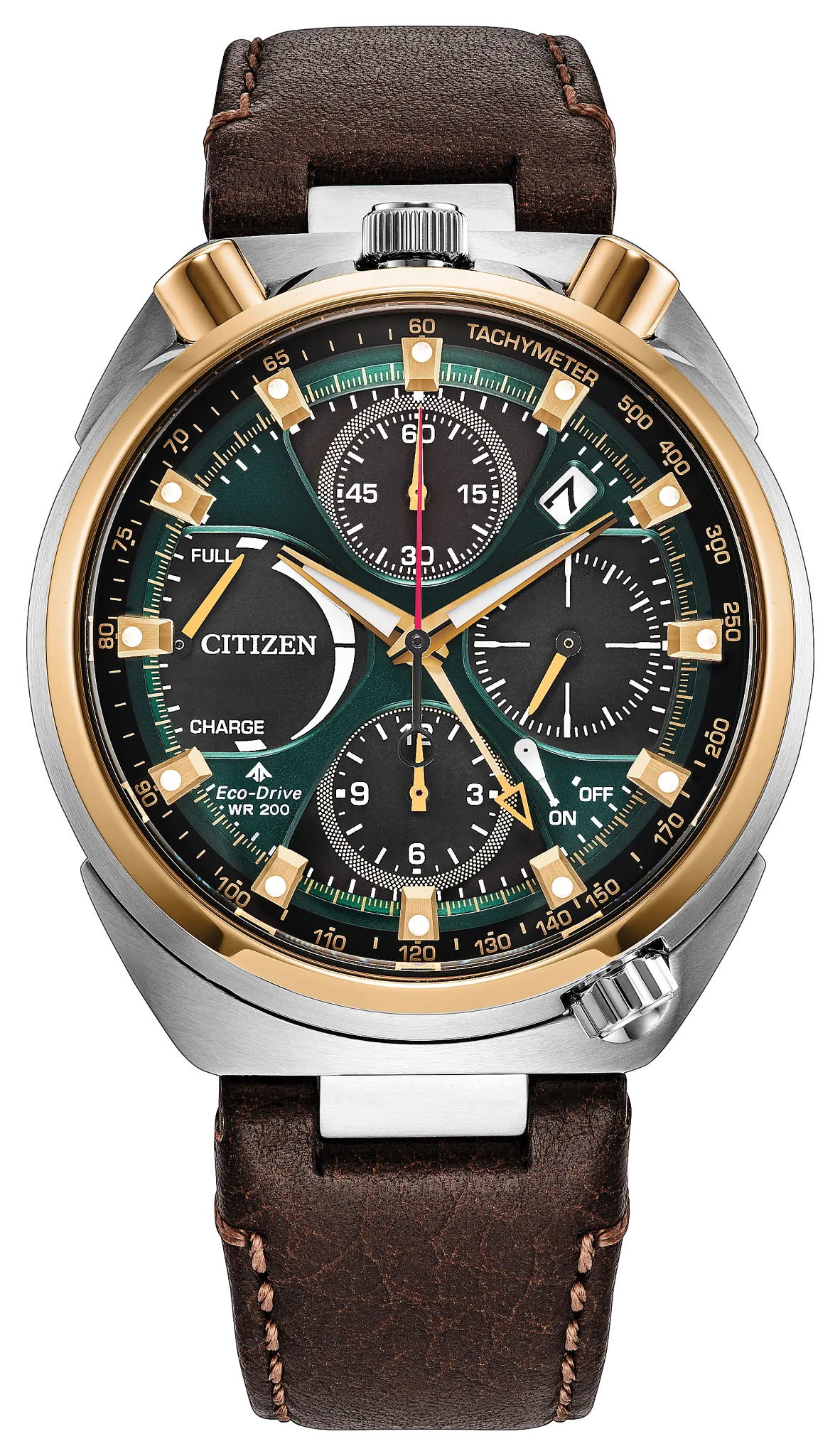
The anniversary of the technology Citizen is best known for is part of the pitch. The company says 2026 marks 50 years since it launched what it calls the world’s first analog light-powered watch, now Eco-Drive, and it released two limited-edition anniversary models on October 1, each limited to 5,000 pieces. For how long that kind of watch runs without light, see our solar watch explainer.
Citizen’s newest mechanical watch is still absent from its US range. We reported on November 10 that the KEI automatic is on sale in Asia and Europe but not the US. Nothing in the November 12 materials changes that.
Orient is not part of either company’s figures. It belongs to Seiko Epson. The next date on Citizen’s calendar is December 4, 2026, when it pays an interim dividend of ¥26.50 a share, up from ¥23.50 a year earlier.