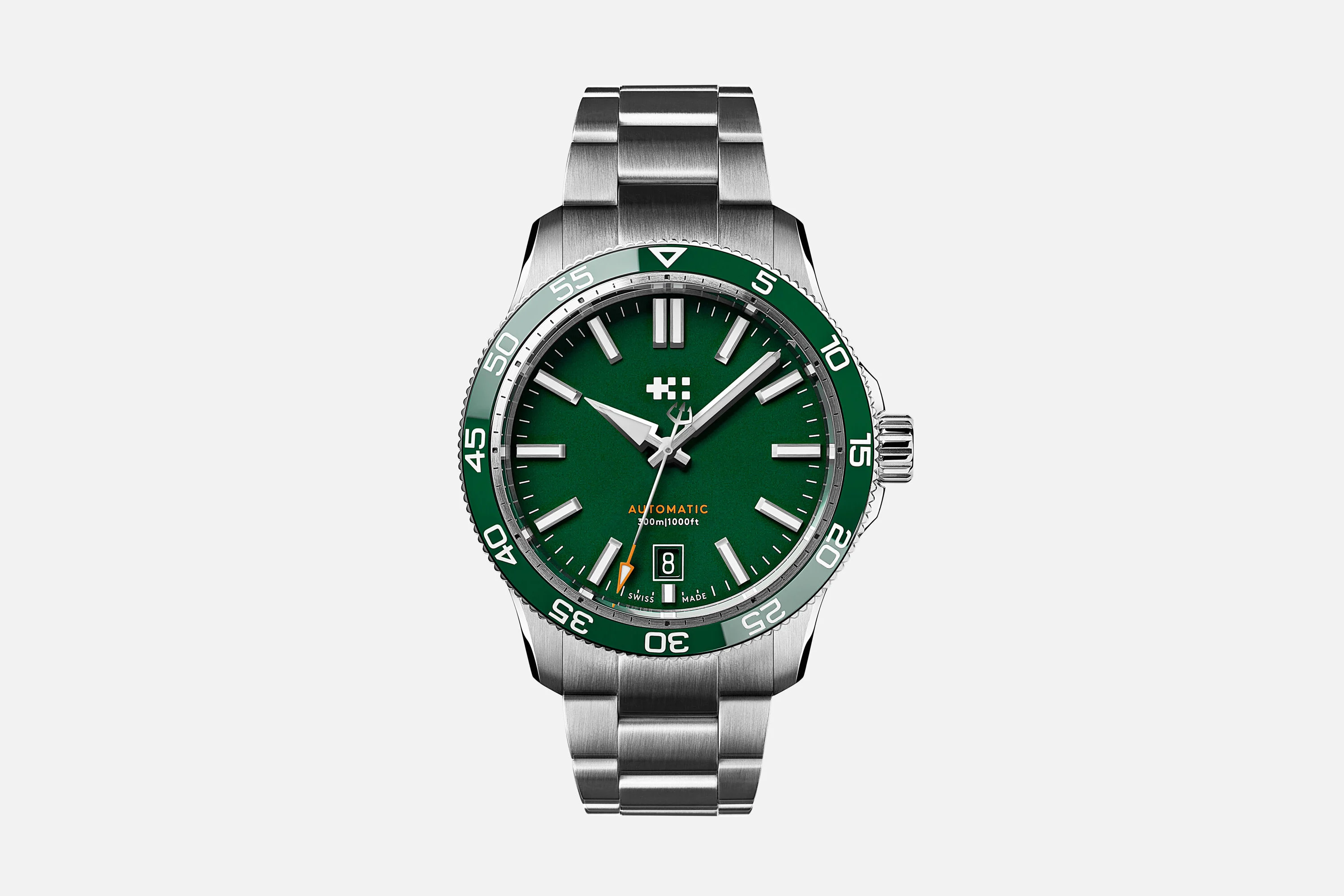
A typical mechanical watch from Orient, Seiko or Grand Seiko is rated to resist a magnetic field of 4,800 amperes per meter, which is about 60 gauss. In practice that means keeping it at least 5cm from a phone, speaker, tablet or magnetic bag clasp, per the makers’ own manuals. Closer than that, a magnetized balance spring can make the watch gain or lose time until it is demagnetized.
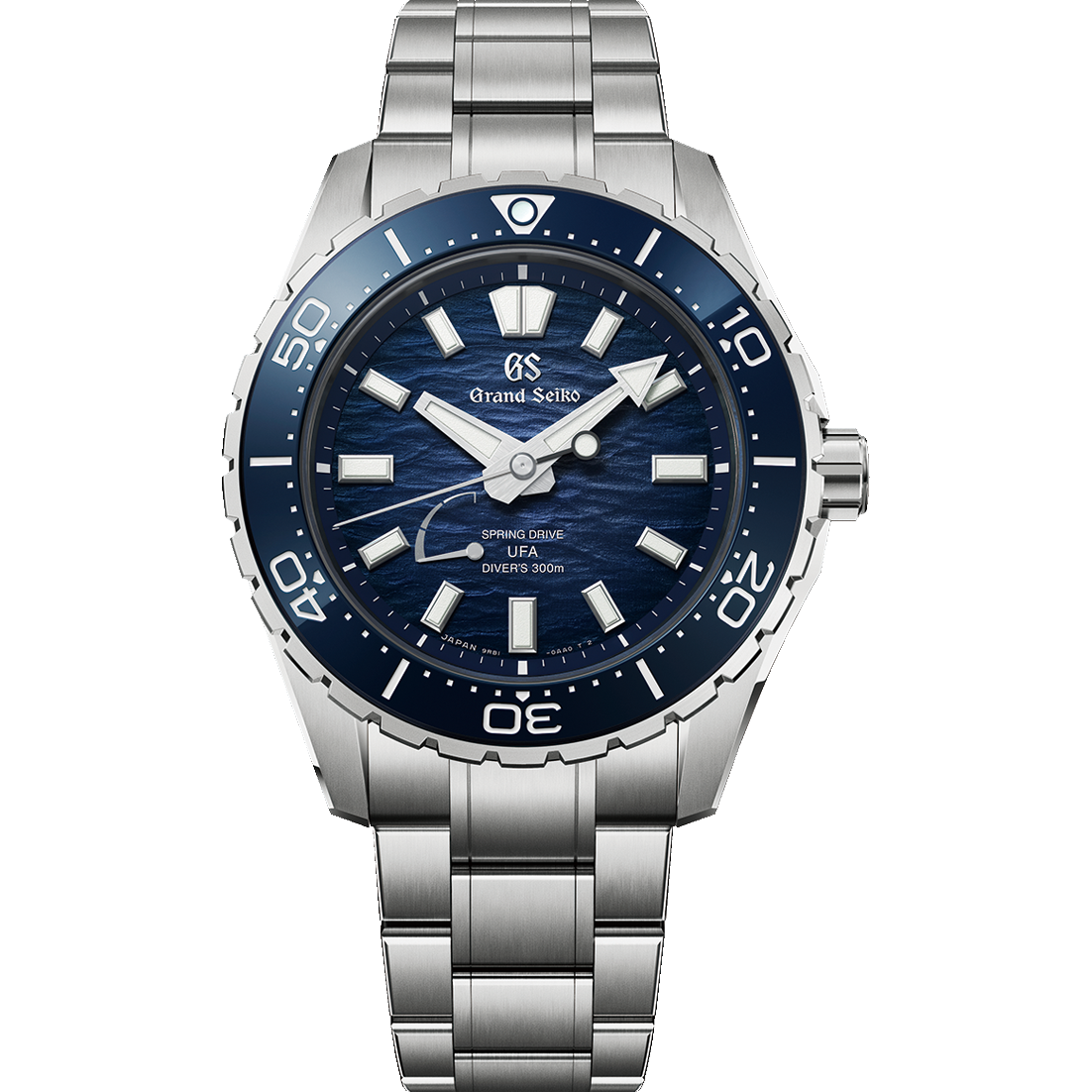
The surprising part is how far up the price range that same rating goes. Epson, which owns Orient, says its mechanical watches are Type 1 antimagnetic, the 4,800 A/m class. Seiko lists 4,800 A/m for the $495 Seiko 5 Sports GMT SSK001. And Grand Seiko lists 4,800 A/m for the $12,400 Ushio 300 Diver that won a prize at the GPHG on November 7. Paying more buys many things. On these spec sheets, magnetic resistance is not one of them.
What does magnetism do to a watch?
It depends on the movement. Epson’s maintenance guide for Orient watches puts it in two lines. In a quartz watch, the stepping motor is itself made with a magnet, so a strong field can make the hands gain or lose time, stop or spin, and “the watch will recover when moved away from the magnetism.” In a mechanical watch, parts inside become magnetized, “affecting the movement of the balance and reducing accuracy,” and the magnetism has to be removed.
Grand Seiko’s manual for its 9SA5 caliber says the same about the balance spring, and adds the detail owners tend to learn the hard way. If a watch becomes magnetized and runs outside its specified rate, demagnetizing and readjusting it is charged “even within the guarantee period.” Seiko’s manuals carry the same warning. Under those terms, magnetism is the owner’s cost.
The usual signal is a watch that was keeping good time and suddenly runs several minutes a day fast. That is a bigger error than any published rating in our accuracy ratings explainer allows, which is one way to tell it apart from ordinary drift.
Why are there three different units?
Because the standards and the brands measure different things. The Japanese Industrial Standard that Seiko, Grand Seiko and Epson cite, and the Grand Seiko marking above it, give the field strength in amperes per meter (A/m), the SI unit. Omega gives the field of its Master Chronometer test in gauss. Engineers often use millitesla. For a field in air the three convert directly, so we put every published figure we could find on one scale.
| Rating | Who uses it | A/m | Gauss (our conversion) | Millitesla (our conversion) | Distance the maker gives |
|---|---|---|---|---|---|
| No magnetic resistance | Epson’s baseline category | Not rated | At least 10cm | ||
| JIS Type 1 / Class 1 | Epson for Orient mechanical calibers, Seiko, Grand Seiko | 4,800 | about 60 | about 6.0 | 5cm |
| JIS Type 2 / Class 2 | Seiko and Grand Seiko “JIS-2” mark | 16,000 | about 201 | about 20.1 | 1cm |
| “Magnetic Resistant 40000A/m” | Grand Seiko marking | 40,000 | about 503 | about 50.3 | At least 1cm, and “in special work environments” |
| Master Chronometer magnetic test | Omega, with tests set by Switzerland’s METAS | about 1.19 million | 15,000 | 1,500 | Not given |
Our compilation from Epson’s Orient maintenance guide (“Effect of Magnetism”), Grand Seiko’s 9SA5 manual, Seiko’s 6R5C manual and Omega’s Master Chronometer page, all opened November 12, 2026. Conversions use B = μ₀H for a field in air (1 gauss = 0.1 millitesla). Rounded.
Two things stand out. The jump from Class 1 to Class 2 is more than threefold, and Grand Seiko’s 40,000 A/m marking is more than eight times Class 1. And Omega’s 15,000 gauss test field is about 249 times the 4,800 A/m of a Class 1 watch, on our conversion. That is a different order of resistance altogether. Omega puts the figure at the center of its Master Chronometer program, which it describes as “8 tests over 10 days,” including a requirement of 0 to 5 seconds a day.
Which watches carry which rating?
We matched the classes above to watches we have covered, using only figures the makers publish. Where a maker describes an antimagnetic part without a number, we say so.
| Watch | Price | Movement | Published magnetic resistance |
|---|---|---|---|
| Orient Bambino No Date RA-BB0002S30B | $295 at Orient Watch USA | F6524 automatic | Type 1 (Epson says “Mechanical watches correspond to type 1 antimagnetic watches”) |
| Seiko 5 Sports SKX GMT SSK001 | $495 | 4R34 automatic | 4,800 A/m |
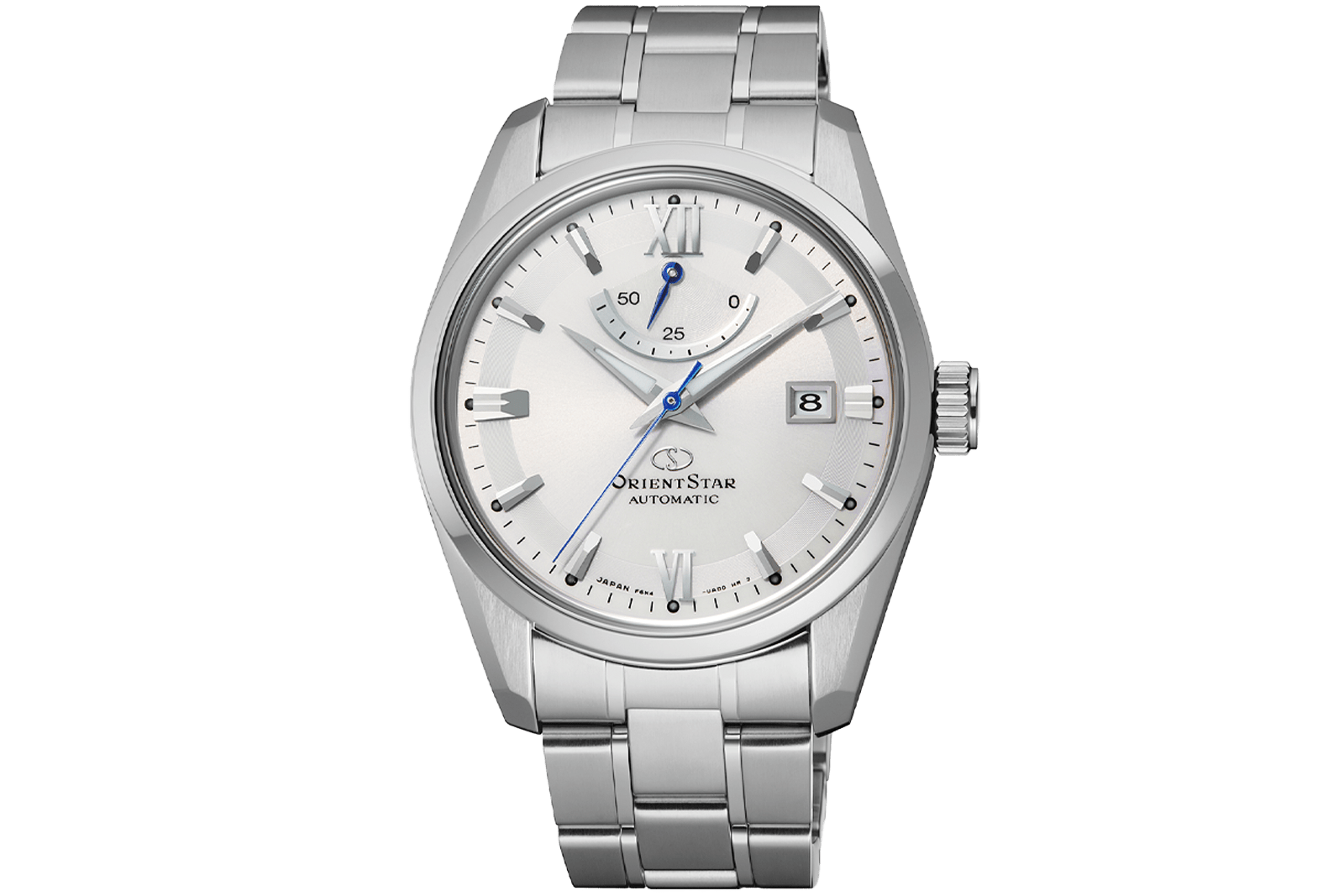
| Orient Star Contemporary Index RE-AU0006S00B | $560 | F6N43 automatic | Type 1 (Epson user guide) |
| Hamilton Khaki Field Mechanical 38mm H69439931 | $675 | H-50 hand-wound | No figure. Hamilton says its Nivachron balance spring reduces the effect of magnetism |
| Tissot Gentleman Powermatic 80 Silicium | $950 | Powermatic 80 automatic | No figure. Tissot cites a patented silicon balance spring |
| Grand Seiko Ushio 300 Diver SLGB023 | $12,400 | 9RB1 Spring Drive | 4,800 A/m |
Prices are the regular prices on each maker’s US site, checked for our earlier coverage between October and November 2026 and, for the Orient watches, on November 12. Our compilation.
The Swiss pair are the interesting case. Hamilton and Tissot both use balance springs designed to resist magnetism, and on our Orient Star and Tissot Gentleman comparison we counted that as a real advantage. Neither publishes a number, though, so their resistance cannot be placed on the table above. A material advantage without a rating is a promise, not a spec.
The Grand Seiko result needs context. The SLGB023 is a Spring Drive watch, which is regulated by a quartz signal and has no balance wheel. We explain how in How Spring Drive Works. It still carries a Class 1 rating on Grand Seiko’s own page, and our profile of the Ushio 300 Diver covers what its ±20 seconds a year does and does not include.
How close is too close?
Epson’s guide is the most specific of the three. It says a Type 1 watch can sit as close as 5cm to things that give off magnetism “and still generally maintain its performance,” while a watch with no rating needs 10cm. Its chart lists speakers, smartphones, radios, laptops, tablets, magnetic necklaces, refrigerator door seals, televisions and magnetic handbag clasps. Its two everyday warnings are about putting the watch in a bag with a phone and setting it down next to a laptop.
Seiko’s manuals give the same 5cm for Class 1 and 1cm for watches with the JIS-2 mark, and list AC adapters, shavers and magnetic cooking devices among the culprits.
For most owners that comes down to a few habits. Do not store the watch on top of a laptop or next to a speaker, and do not drop it into the same pocket as a phone. If a mechanical watch starts gaining minutes a day out of nowhere, magnetism is the first thing to rule out. Unlike a quartz watch, it will not recover on its own once moved away. Epson says the magnetism inside has to be removed.
What to look for on a spec sheet
Look for a figure in A/m or a JIS class, and treat “antimagnetic” without a number as marketing until proven otherwise. On Orient Watch USA, the product pages do not show it. We checked all 234 Orient Watch USA listings with a spec table on November 12 and none lists a magnetic rating. The figure is in Epson’s user guides for each caliber. Our guide to reading a watch spec sheet covers the other lines on the sheet.